
Sidney Crosby’s Olympic chapter might be coming to a close, but Canadian hockey isn’t going anywhere. With McDavid, MacKinnon and Makar ready to take the reins and a frighteningly talented young generation coming up behind them, the future of Team Canada looks pretty damn exciting.
There’s something a little bittersweet about looking ahead to the next Olympic hockey tournament.
For the better part of two decades, we’ve watched some of the greatest players this country has ever produced pull on the Maple Leaf. Olympic gold. World Cup titles. A 4 Nations crown. Moments that are burned into our brains forever. And through almost all of it, one constant: Sidney Crosby.
But hockey doesn’t wait for anybody. Even legends eventually hand over the keys.
As much as I’d love to see Sid keep doing Sid things forever, there’s a real chance we’ve already watched his final Olympic shift.
The good news? We are in pretty damn good hands.
Connor McDavid, Nathan MacKinnon and Cale Makar are stepping into the driver’s seat. Evan Bouchard is knocking on the door. And right behind them is a wave of young talent, led by Macklin Celebrini, Connor Bedard and Matthew Schaefer, that should have the rest of the hockey world sweating.
We’re still more than three years out from the 2030 Winter Olympics in the French Alps, and there’s a big stop along the way: the 2028 World Cup of Hockey, right here in Alberta. But it’s never too early to start building the roster in your head.
So let’s take a look at who’s potentially checking out, who’s taking over and who might be wearing the Maple Leaf for the next decade.
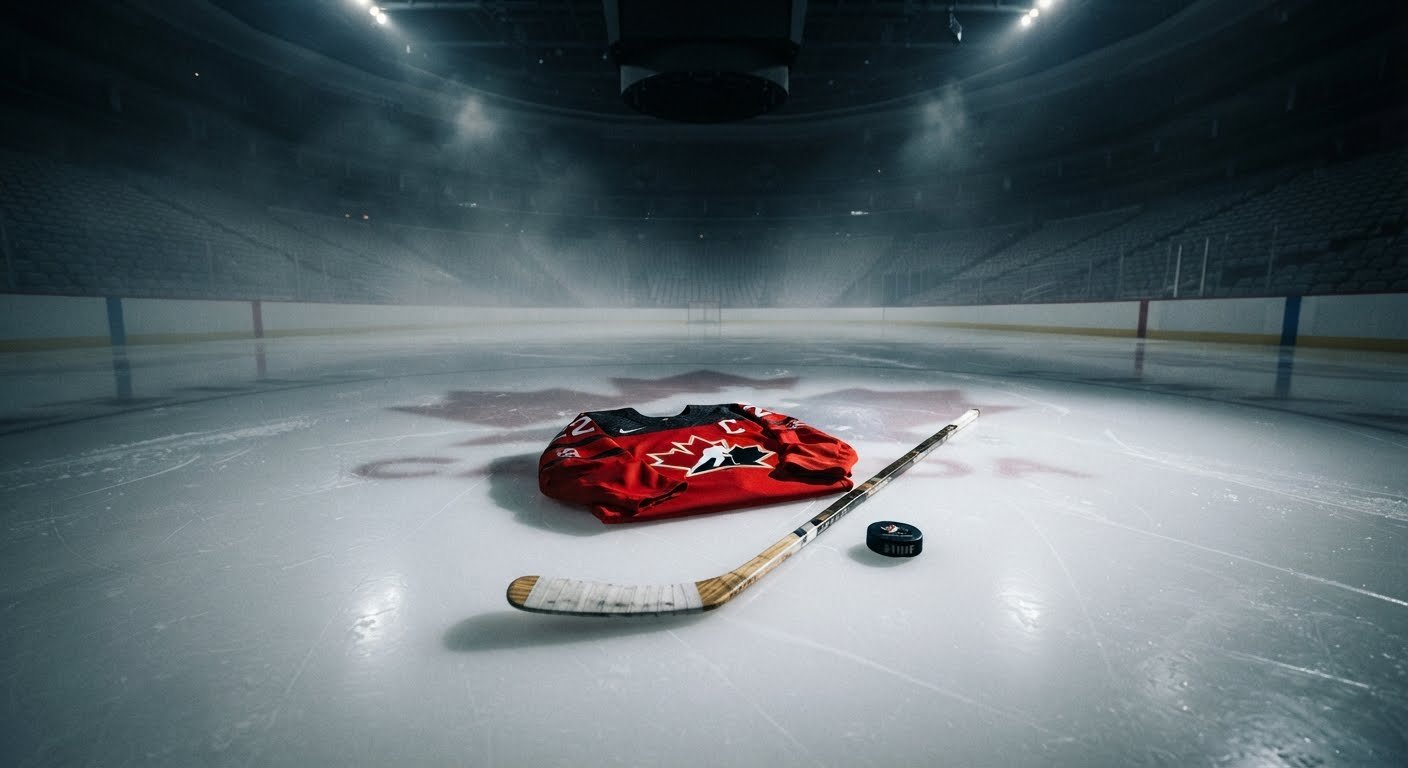
The Last Dance? The Sidney Crosby Question
Let’s start with the obvious one.
Sidney Crosby has been the face of Canadian hockey for so long that it’s hard to picture a best-on-best tournament without him in it.
The Golden Goal in Vancouver in 2010. Captaining Canada to an unbeaten run to gold in Sochi in 2014. World Championship gold in 2015. Tournament MVP at the 2016 World Cup. The 4 Nations title in 2025. That’s a résumé very few players in hockey history can touch.
And it’s never just been about the points or the hardware. It’s how he represents the country. When Crosby pulls on that jersey, you know exactly what you’re getting: leadership, accountability and a guy who would crawl through broken glass to win a hockey game.
He wore the C again in Milan, with McDavid and Makar as his alternates, and he was rolling with six points through three preliminary games.
Then came the quarterfinal against Czechia.
Early in the second period, Crosby took a string of heavy hits, his right leg buckled on a check from Radko Gudas and he limped down the tunnel. He didn’t come back. Canada battled back without him, with Nick Suzuki tying it late and Mitch Marner winning it 4-3 in overtime, but Crosby missed both the semifinal and the gold medal game.
You know the rest. Canada fell 2-1 to the United States in overtime and went home with silver. Crosby, who later admitted he was close to playing, watched the final from the trainer’s room before joining the boys for the medal ceremony.
So, is that it?
Crosby is 39 now. He’ll be 40 for the February 2028 World Cup and 42 when the 2030 Olympics roll around.
I’m not going to sit here and tell you there’s zero chance he’s back. This is Sidney Crosby. The man has spent two decades making doubters look foolish. He still put up 74 points in 68 games in 2025-26, and instead of taking the spring off after that Olympic heartbreak, he joined Canada at the World Championship in Switzerland and scored against the Americans in the quarterfinal.
My prediction? I think we get one more best-on-best appearance at the 2028 World Cup. The 2030 Olympics are a much bigger question mark.
Either way, if we’ve seen the last of Crosby as captain of Team Canada, we’re saying goodbye to one of the greatest leaders this country has ever put on the ice.
That deserves a standing ovation.
The Old Guard: Who Might Not Be Back?
Crosby isn’t the only familiar face we might be waving goodbye to.
Look at the 2026 Olympic roster and there’s a handful of veterans who could realistically be nearing the end of the international road by 2030.
Brad Marchand is the obvious one. He’ll be 41 during the next Olympics. He’s been a big part of Canada’s best-on-best success and brings exactly the kind of agitating, competitive edge you want in a short tournament. But four years is a lifetime in pro hockey.
Drew Doughty will be 40. He and Crosby were the only two players on the 2026 roster with previous Olympic experience, both owning gold from 2010 and 2014. That kind of experience is gold in itself, but the clock is ticking.
Then there’s Mark Stone, who’ll be 37, and Darcy Kuemper, who’ll be 39 and was Canada’s third-stringer in Milan.
Jordan Binnington will be 36. I wouldn’t rule him out completely, though, especially after what he did in Milan. More on that later.
Others could go either way. Sam Reinhart, Bo Horvat, Mitch Marner and Tom Wilson will all be in their 30s, but young enough that another run with the Maple Leaf isn’t out of the question.
And that’s an important distinction. This isn’t a full teardown. Some of these guys will still be playing excellent hockey in 2030. Others will simply get pushed out by younger players with more speed, more skill and more versatility.
The question isn’t whether Canada will have enough talent. It’s how many of these familiar faces will still have a seat at the table when the next roster gets built.
The New Leaders: McDavid, MacKinnon and Makar
If Crosby does move on, who takes over?
We don’t have to look very far.
Connor McDavid. Nathan MacKinnon. Cale Makar.
That’s a ridiculous place to start a leadership group.
Connor McDavid: The Heir to the C
McDavid is the obvious choice to wear the C next time around, and honestly, the handoff has already started. When Crosby went down in Milan, McDavid took over the captaincy for the semifinal and the gold medal game. He also led the entire Olympic tournament in scoring.
He’s in the best-player-in-the-world conversation every single season, he’s got the 4 Nations overtime winner on his résumé and he’s already shown he can carry the weight of the letter. By 2030, he’ll be 33 and still one of the most dangerous players on the planet.
And for those of us in Edmonton, picture this: McDavid potentially leading Canada into a World Cup final at Rogers Place in 2028. That building would come unglued.
Nathan MacKinnon: The Fire
MacKinnon was named MVP of the 4 Nations Face-Off, and when Crosby got hurt in Milan, he was handed an extra letter as an alternate captain for the semifinal and the final.
The competitive fire is obvious. When the games matter most, he’s exactly who you want hopping over the boards. He’ll be 34 in 2030, and still very much in the mix.
Cale Makar: The Backbone of the Blue Line
Now let’s give Makar his proper due, because he might be the most important piece of this whole puzzle.
Canada has never had trouble producing forwards. A true franchise defenceman who can control an entire game from the back end? That’s a lot rarer. And Canada has one in the heart of his prime.
Makar wore an A at both the 4 Nations and the Olympics, and when Canada needed someone to answer in the gold medal game, it was Makar who tied it late in the second period and dragged us to overtime. He finished the Olympic tournament with six points in six games and earned a spot on the tournament All-Star Team.
His résumé is already absurd: Calder Trophy, Stanley Cup, Conn Smythe and two Norris Trophies. He put up 79 points in 75 games for Colorado in 2025-26 and was a Norris finalist for the sixth straight season.
Here’s the scary part. He’s only 28. He’ll be 29 for the World Cup and 31 for the Olympics, which is right in the sweet spot for an elite defenceman.
There’s a hometown angle that makes 2028 extra special, too. Makar is a Calgary kid, and Calgary’s brand-new Scotia Place will host round-robin games at the World Cup in its very first season. He was even one of the faces the NHL used to announce the host cities. Makar wearing the Maple Leaf in front of a home crowd in Calgary? That’s going to be loud.
Canada’s blue line will be built around him for years to come. Whoever ends up with the C, I fully expect McDavid, MacKinnon and Makar to be the foundation of this team’s leadership moving forward.
Evan Bouchard: The Wild Card
There’s one more name I want in this conversation.
Evan Bouchard.
The Oilers defenceman was left off both the 4 Nations and Olympic rosters, which still doesn’t sit right with plenty of fans in this city. So he went out and made a statement. Bouchard put up 95 points in 2025-26, then made his senior international debut at the 2026 World Championship, posting six points and a plus-14 in eight games before an illegal hit to the head from Ryan Lindgren ended his tournament in the quarterfinal against the U.S.
His elite passing, his shot from the point and his power-play brain make him a really interesting fit for Canada’s future blue line. He’s not walking into a leadership role, but I’d be surprised if he isn’t pushing hard for a spot.
By 2030, Bouchard will be 30. That’s a lot of hockey left.
The Big Three: Celebrini, Bedard and Schaefer
Now we get to the really fun part.
If there’s a group of young players who could define the next decade of Canadian hockey, these are the three names to circle.
Macklin Celebrini: The Future Is Already Here
Macklin Celebrini might be the most exciting name on this entire list.
Actually, scratch that. Let’s call it what it is: Celebrini is already one of the faces of Canadian hockey.
He made the 2026 Olympic team at 19, and he didn’t just tag along for the experience. He led the entire tournament with five goals and finished with 10 points in six games, second only to McDavid. In that wild quarterfinal against Czechia, he scored early and set up Marner’s overtime winner.
Back in San Jose, he put up 115 points to set a new Sharks franchise record and was named a finalist for the Ted Lindsay Award.
Then Hockey Canada handed him the C for the 2026 World Championship, making him the youngest captain in the history of Canada’s senior men’s team.
Let that sink in. A 19-year-old wearing the C for Canada. And when Sidney Crosby was added to the roster a few days later? Celebrini kept the C.
He didn’t shrink under the pressure, either. Celebrini finished the tournament with 14 points, including six goals and eight assists, leading Canada and ranking second in the entire tournament. Canada came up short, losing to Finland in the semifinal and to Norway in overtime of the bronze medal game to finish fourth, but the individual performance and the trust he’s been given say everything.
By the 2030 Olympics, Celebrini will be 23.
That’s a terrifying thought for the rest of the hockey world.
Connor Bedard: A Point to Prove
Then there’s Connor Bedard.
Nobody needs an introduction to what this kid can do with a puck on his stick.
Bedard was left off the 4 Nations roster, then left off the Olympic team, too. He was injured when the Olympic roster was announced, but he was also in the middle of a monster season, so plenty of fans saw it as a snub. Canada’s management group leaned on veteran experience, defensive responsibility and specific roles.
Don’t think for a second that Bedard doesn’t want to flip that conversation on its head.
The 2028 World Cup is his chance to force his way in before the next Olympics. By 2030, he’ll be 24 and heading into the prime of his career.
His shot, his offensive instincts and his ability to create something out of nothing are exactly the kind of tools that swing short tournaments. If he’s playing the way we all know he can, I wouldn’t want to be the management group that leaves him home a third time.
Matthew Schaefer: Canada’s Next Blue-Line Superstar?
Here’s a name that deserves way more attention when we’re talking about the future of Team Canada.
Matthew Schaefer.
The first overall pick in the 2025 NHL Draft had a rookie season with the Islanders that was flat-out ridiculous: 23 goals, 59 points, all 82 games played and a rookie-leading 24:41 of ice time per night.
His 23 goals tied Brian Leetch’s record for a rookie defenceman. His 59 points set a new record for an 18-year-old blueliner. And he took home the Calder Trophy with all 198 first-place votes, becoming the first unanimous winner since Teemu Selanne in 1992-93 and the youngest winner in NHL history.
Not bad for a teenager.
Here’s why that matters for Canada. We’ve never had trouble producing forwards. We practically grow them on trees. But a young, dynamic, offensively gifted defenceman who can move the puck, create offence and dictate the pace of a game? Every country on earth wants one of those.
Schaefer played himself into the Olympic conversation before just missing the cut. By 2030, he’ll be 22 and could already be one of the best defencemen in the world.
Now picture this blue line: Cale Makar, Matthew Schaefer and Evan Bouchard.
Yeah. I could watch that for a few years.
And the pipeline doesn’t stop there. Thomas Harley already got his first taste of Olympic hockey in Milan, while Sam Dickinson and Denton Mateychuk both suited up for Canada at the 2026 World Championship.
Canada’s blue line isn’t going to be short on options.
Don’t Forget the Supporting Cast
It’s easy to get caught up in the big names, but Olympic teams aren’t built with six superstars and a prayer.
The guys filling out the roster matter just as much.
Nick Suzuki has already proven he belongs on this stage. All he did in Milan was score the late equalizer that saved Canada’s tournament against Czechia. He’ll be 30 in 2030 and right in the middle of his prime.
Seth Jarvis was part of the 4 Nations team before injury kept him out of the Olympics. He’ll be 28 in 2030 and brings speed, scoring and versatility.
Brandon Hagel made the trip to Milan and plays the kind of competitive, responsible game that coaches love in short tournaments.
Then there are players like Adam Fantilli, Wyatt Johnston and Dylan Guenther, all of whom have the tools to become key pieces up front. Johnston was one of the bigger names left off the Olympic team, and you can bet he noticed.
Keep an eye on Porter Martone, too, as he continues to develop.
And who knows who else will emerge between now and 2030? That’s the beauty of looking this far ahead. Some of the players who eventually make this team might not be household names yet.
The Biggest Question Mark: Canada’s Goaltending
There’s one position that deserves a closer look.
Goaltending.
We can talk about McDavid, Makar, Celebrini and Bedard all day long, but winning international tournaments still requires someone between the pipes who can steal a game.
Canada went to Milan with Jordan Binnington, Logan Thompson and Darcy Kuemper.
Binnington got the call, and honestly, he was good. He won four games with a 1.78 goals-against average and a shutout, then made 26 saves in the gold medal game before Jack Hughes beat him 1:41 into overtime. Add in his clutch performance at the 4 Nations and the guy has earned his reputation as a big-game goalie.
But what does the future look like?
Logan Thompson is an interesting one. He’ll be 32 at the 2030 Games and could still be a big part of the conversation.
Beyond him, there are some names worth watching.
- Jet Greaves: Made his international debut at the 2026 World Championship and went 6-2 with a 1.88 goals-against average and a .920 save percentage, including a 34-save shutout of the Americans in the quarterfinal. Columbus locked him up this summer on a three-year, $15-million deal.
- Joel Hofer: Another young Canadian netminder who could develop into an international option.
- Dustin Wolf: The Flames goaltender is worth watching as he continues to establish himself in the NHL.
- Mackenzie Blackwood: Could remain in the mix depending on how his game develops over the next few seasons.
There’s also Stuart Skinner and Adin Hill, among others, who could stay in the conversation for the 2028 World Cup.
The reality? We don’t have a clear-cut, long-term Canadian number one waiting in the wings just yet. That might be the biggest question facing Hockey Canada over the next few years.
The good news is there’s time. A lot can change in three or four NHL seasons, especially in the crease.
The 2028 World Cup: The Next Dress Rehearsal
Before we get to the French Alps, there’s another tournament that should tell us a lot about where Canadian hockey is headed.
The World Cup of Hockey returns in February 2028.
And for Canadian fans, especially those of us in Alberta, there’s an extra reason to get fired up.
Eight countries. Seventeen games. Thirteen days. Calgary and Prague will each host six round-robin games and an elimination game, while the semifinals and the championship game will be played right here in Edmonton at Rogers Place.
That’s right. The next best-on-best tournament is coming to Alberta, and the medals are being handed out in Edmonton.
This will be a huge opportunity to see which veterans are still going strong, which young guns have forced their way in and who Hockey Canada trusts when the stakes are highest.
I’d expect McDavid, MacKinnon and Makar to be front and centre. Celebrini should be a lock. Bedard gets another shot to make his case. Bouchard and Schaefer could both be pushing for spots on the back end.
And maybe, just maybe, we get one more look at Crosby wearing the Maple Leaf.
What a way that would be to close out another chapter.
The Future of Team Canada Is in Good Hands
Look, Canadian hockey fans have been spoiled.
We’ve watched generation after generation of incredible players represent this country, and there’s always going to be a little nostalgia attached to the guys who delivered the biggest moments.
But I don’t think we need to worry about what’s coming.
McDavid, MacKinnon and Makar are established superstars ready to carry the leadership load.
Celebrini is already proving he can handle the spotlight.
Bedard still has plenty to prove internationally, but the talent is undeniable.
Schaefer looks like a future cornerstone on the blue line.
And there’s an entire group behind them that could make the next Olympic roster look very different from the one we watched in Milan.
The biggest challenge for Hockey Canada might not be finding enough talent. It might be deciding which ridiculously talented players have to stay home.
That’s a pretty good problem to have.
So here’s to the old guard, the new generation and whatever happens between now and the French Alps in 2030.
And Sid, if you’ve got one more tournament in you, I think I speak for an entire country when I say we’d love to see it.
But when the time comes to hand over the reins, we’re in pretty damn good hands.
The next shift is coming. And I can’t wait to watch it.
Sources: NHL.com, Hockey Canada, TSN, The Canadian Press, Associated Press, ESPN, The Hockey News, Daily Faceoff, theScore, USA Today, Oilersnation